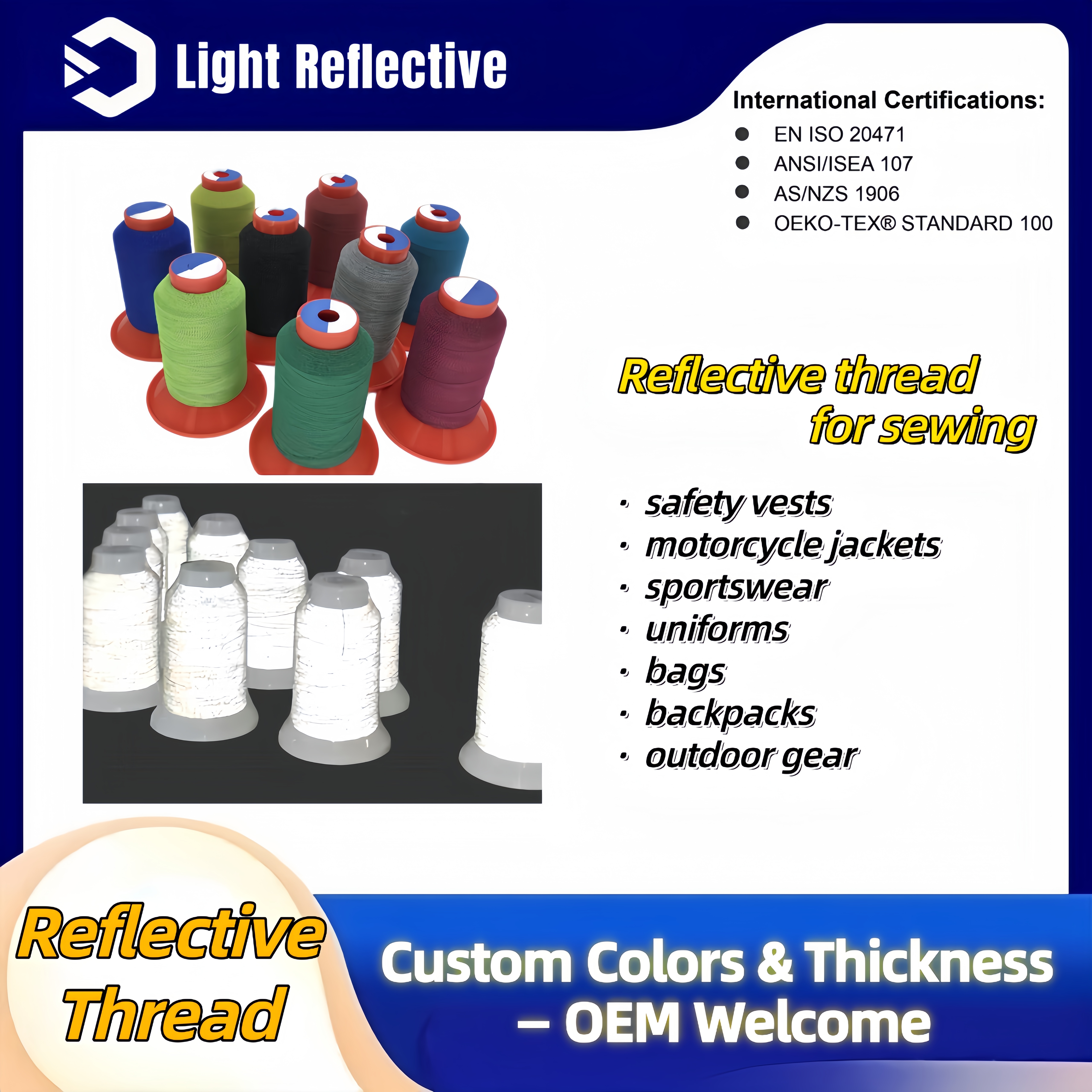
Q1: What is the difference between reflective yarn and reflective thread?
A:Reflective yarn is the core reflective material (film strips), primarily used for weaving or knitting fabrics. Reflective thread is a composite product made by twisting reflective yarn together with traditional textile thread (like polyester) to enhance strength. Reflective thread is thicker and more durable, specifically designed for sewing, embroidery, and stitching applications. Reflective yarn is finer and more delicate, more suitable for fabric production.
Q2: What colors are available for reflective sewing thread? Can I get custom colors?
A: Yes, customization is available. Standard colors typically include Silver/Grey (the most common and reflective), White, Black, and Fluorescent colors (Yellow, Orange, Red) for daytime visibility. Many suppliers offer custom daytime colors (e.g., Blue, Green, Pink) for branding needs. Regardless of the daytime color, the reflected light at night is always a brilliant silver-white.
Q3: What are the main applications for reflective sewing thread?
A:Its applications are diverse and growing:
1. Safety & Workwear: High-visibility vests, police/firefighter uniforms, construction worker clothing.
2. Outdoor & Sportswear: Running jackets, cycling jerseys, hiking gear for early morning or evening visibility.
3. Fashion & Footwear: Decorative accents on sneakers, bags, caps, jeans, and streetwear.
4. Accessories: Backpacks, pet collars, leashes, and luggage straps.
Q4: Can reflective thread be washed? How durable is it?
A:Yes, it has good washability and dry-cleanability. High-quality reflective thread can withstand routine garment dyeing and finishing processes. It typically endures more than 30–50 wash cycles without significant loss of reflectivity. However, avoid prolonged high-temperature exposure, strong alkaline detergents, and abrasive scrubbing, as these can degrade the reflective layer over time.
Q5:Why does my reflective thread not seem bright enough when I test it?
A:The most common reason is incorrect testing method:
1. Distance: You must stand at least 3 meters away. Retroreflection requires a minimum distance for the light to reflect properly.
2. Angle: The reflection returns directly to the light source. For the driver to see it, the light must come from behind the observer (e.g., car headlights).
3. Light Intensity: The brightness is proportional to the light source's intensity; stronger light produces stronger reflection.